Intro
What To Look For In a Cage:
Bar Orientation and Spacing: Why It Matters
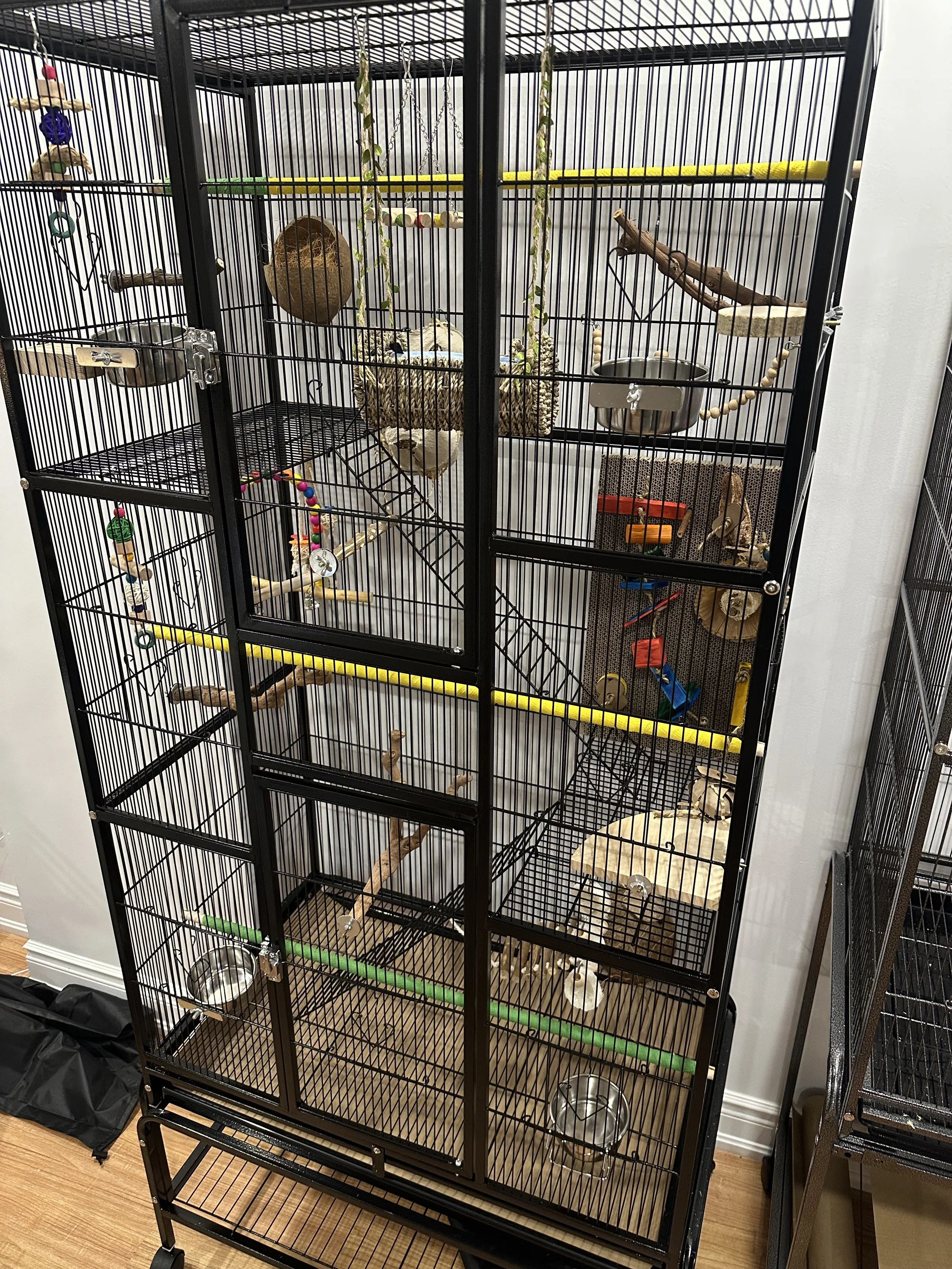
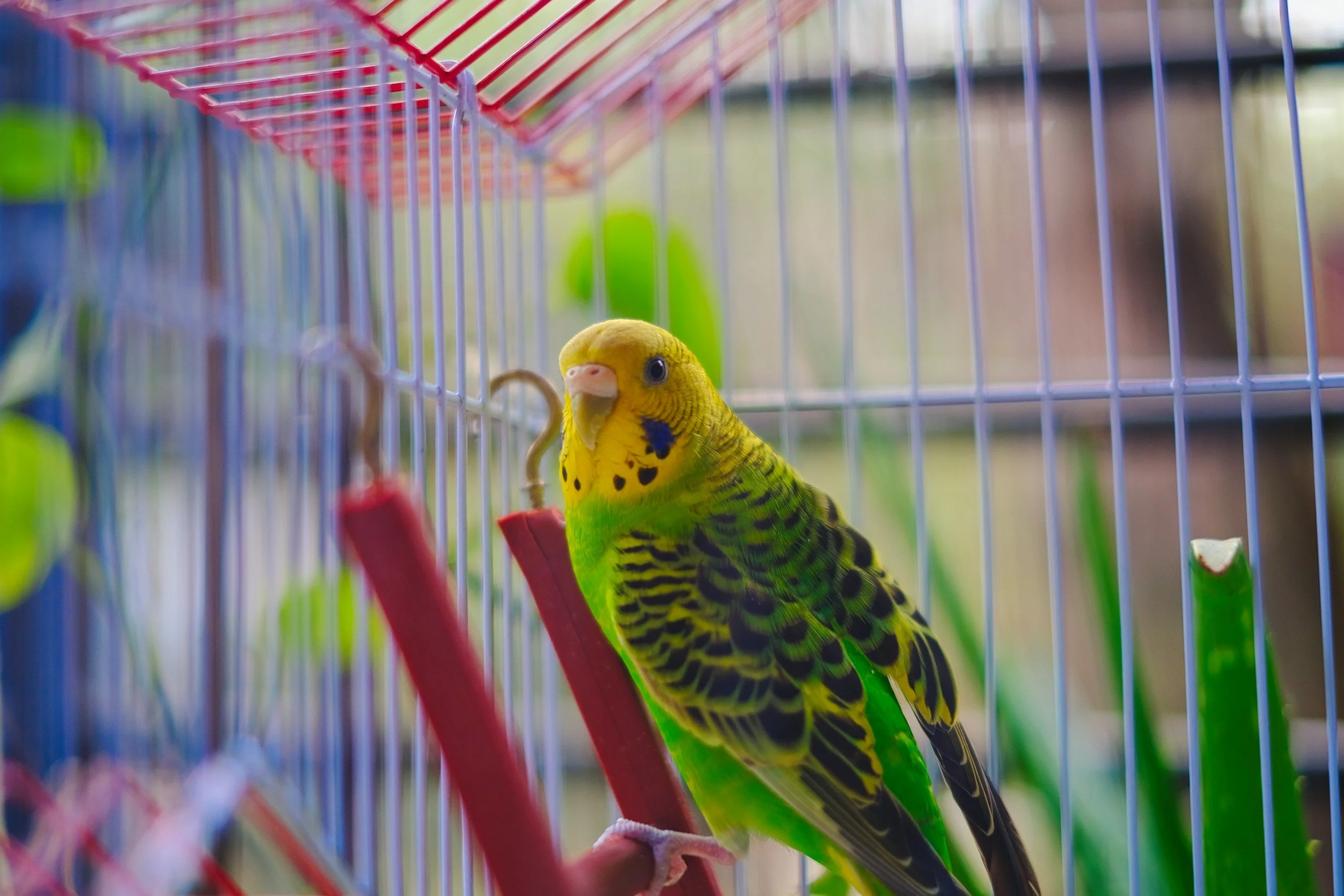
Bar spacing is one of the most important factors to consider when choosing a cage for your bird. If the bars are spaced too far apart, your bird may be able to squeeze its head or body through the opening, which can lead to serious injury or escape. If the spacing is too narrow, climbing can become more difficult, especially for larger birds.
The direction of the bars is also worth considering. Some birds, especially those with shorter tails feathers, prefer cages with horizontal bars because they make climbing easier and encourage natural movement and exercise. For birds with longer tails, vertical bars may help reduce feather wear, as their tail feathers are less likely to rub or bend against the bars while climbing. This is why its important to consider your bird's species, body shape, and natural climbing habits when selecting a cage.
Choosing a cage with the proper bar spacing and bar orientation for your bird's species helps support their natural behaviors, encourages healthy movement and climbing, and creates a safer, more comfortable environment for your feathered buddy.
Cage sizing and basic requirements:
There is no one-size-fits-all cage for pet birds. The appropriate cage size and setup will vary depending on your bird's species, size, activity level, and natural behaviors.
At a minimum, your bird should be able to fully extend and flap its wings without touching the sides of the cage. It should also be able to move comfortably between perches, climb, play, and access food and water without obstruction. Active species, such as conures, caiques, and Quaker parrots, often benefit from larger cages than the minimum recommendations, as they spend a significant amount of time climbing and exploring.
When choosing a cage, remember that bigger is almost always better, provided the bar spacing is appropriate for your bird. A larger cage allows for more natural movement, additional perches and enrichment, and greater opportunities for exercise, all of which contribute to your bird's physical and mental well-being.
Avoiding Overcrowding with Toys and Accessories
While toys, perches, and enrichment items are essential for your bird's physical and mental well-being, it is important to avoid overcrowding the cage. A cage that is filled too heavily with toys and accessories can limit your bird's ability to move freely, stretch its wings, and navigate comfortably.
Birds need open space to fly, climb, hop between perches, and choose where they feel most comfortable. Too many items can create obstacles, increase the risk of collisions, and make it difficult for your bird to access food and water.
Overcrowding can also make cleaning more challenging and may contribute to a less hygienic environment.
What we recommend:
Instead of filling the cage with many toys at once, focus on providing a variety of high-quality enrichment opportunities. Offer a balance of:
Different types of perches to support foot health and encourage movement
Providing a variety of perches is an important part of creating a healthy cage environment. Birds spend a large portion of their day standing on their feet, so offering different perch sizes, shapes, and materials helps promote proper foot health, exercise, and natural movement.
Avoid using only one type of perch, especially smooth, uniform dowel perches (most cages come with these), as they keep the feet in the same position for extended periods and may contribute to pressure points or foot problems over time. Here are some different types of perches we recommend:
natural wood perches - different shapes and sizes (make sure size is appropriate for your parrot)
cotton rope perches - these must be used with caution (birds that loves to chew can dismantle one and this could lead to a linear foreign body ingestion which can be fatal + may require surgery to correct)
Flat perches - these look like planks of wood, they help your bird rest their feet whenever they need to
Textured or specialty perches: Some textured surfaces can provide enrichment, but avoid using abrasive perches as a primary resting area. Birds naturally maintain their nails through normal activity, and rough surfaces can cause irritation or injury if overused.
Well-chosen toys that promote chewing, foraging, climbing, and problem-solving
Most commercially made bird toys include recommended species sizing on the packaging. These recommendations are important and should not be ignored. A toy designed for a small bird may not be safe or durable enough for a larger, stronger species, while a toy made for a larger bird may be too heavy, difficult to manipulate, or intimidating for a smaller bird.
If you choose to make your own bird toys, always carefully consider the safety of the materials used. Avoid materials that may contain toxic chemicals, including unsafe glues, paints, dyes, coatings, or finishes applied to wood and metal components. When in doubt about a material, research it from reliable sources before offering it to your bird.
Open areas for movement and wing stretching
At least two different areas for finding fresh food and water
Regular toy rotation to keep the environment interesting without overwhelming the space
The ideal cage setup should feel stimulating but not cluttered. Your bird should have enough enrichment to stay engaged while still having room to move, rest, and behave naturally.
Remember, cage setup is always species-specific, but your individual bird's personality should also be taken into consideration. Every bird has unique preferences, activity levels, and comfort needs. Some birds may enjoy climbing and exploring, while others may prefer more open space, quiet areas, or different types of enrichment.
Pay attention to your bird's behaviors and adjust their environment accordingly. A cage setup should support both the natural needs of the species and the individual preferences of your feathered companion.
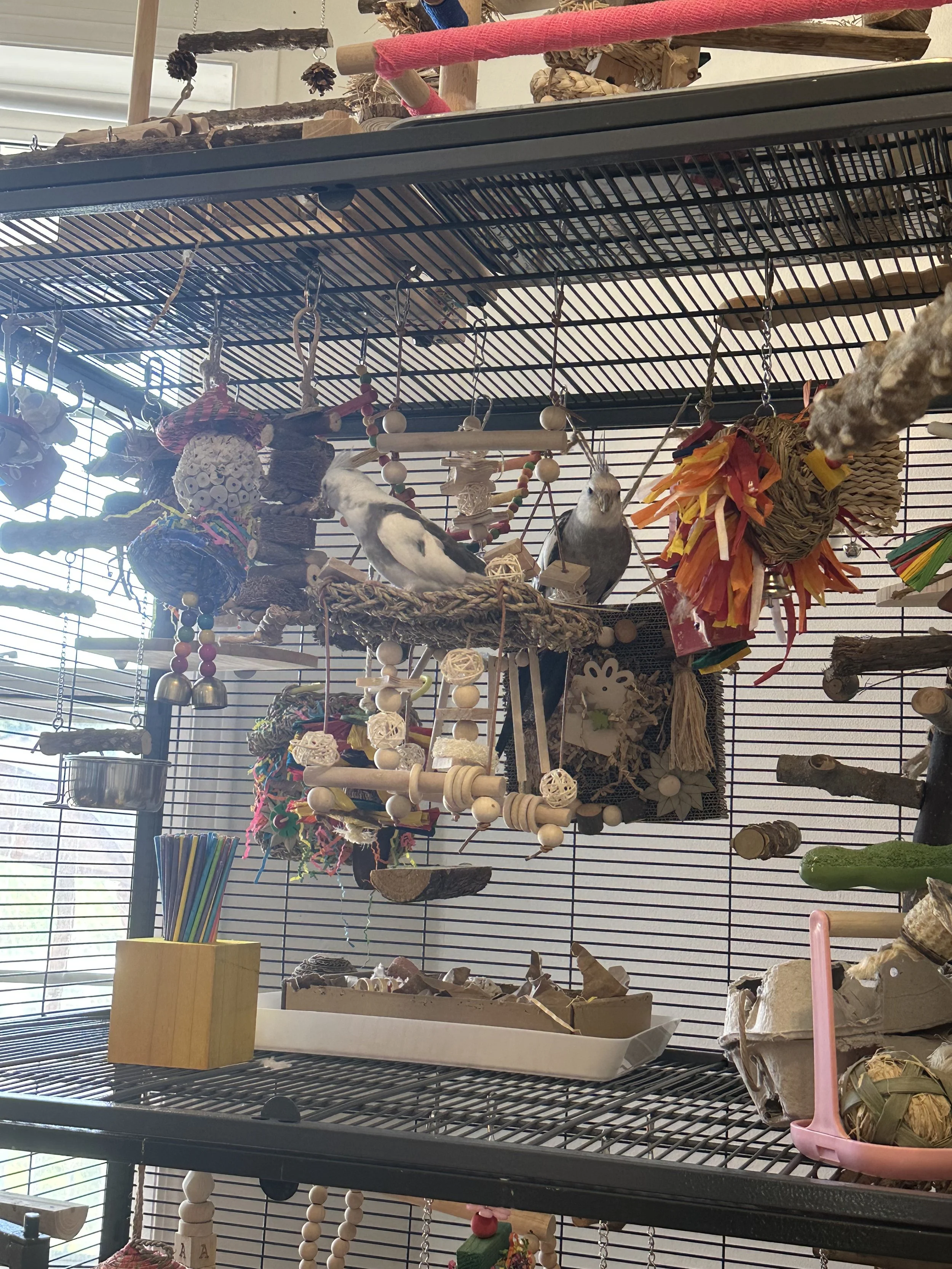
Small bird cage set-up example:
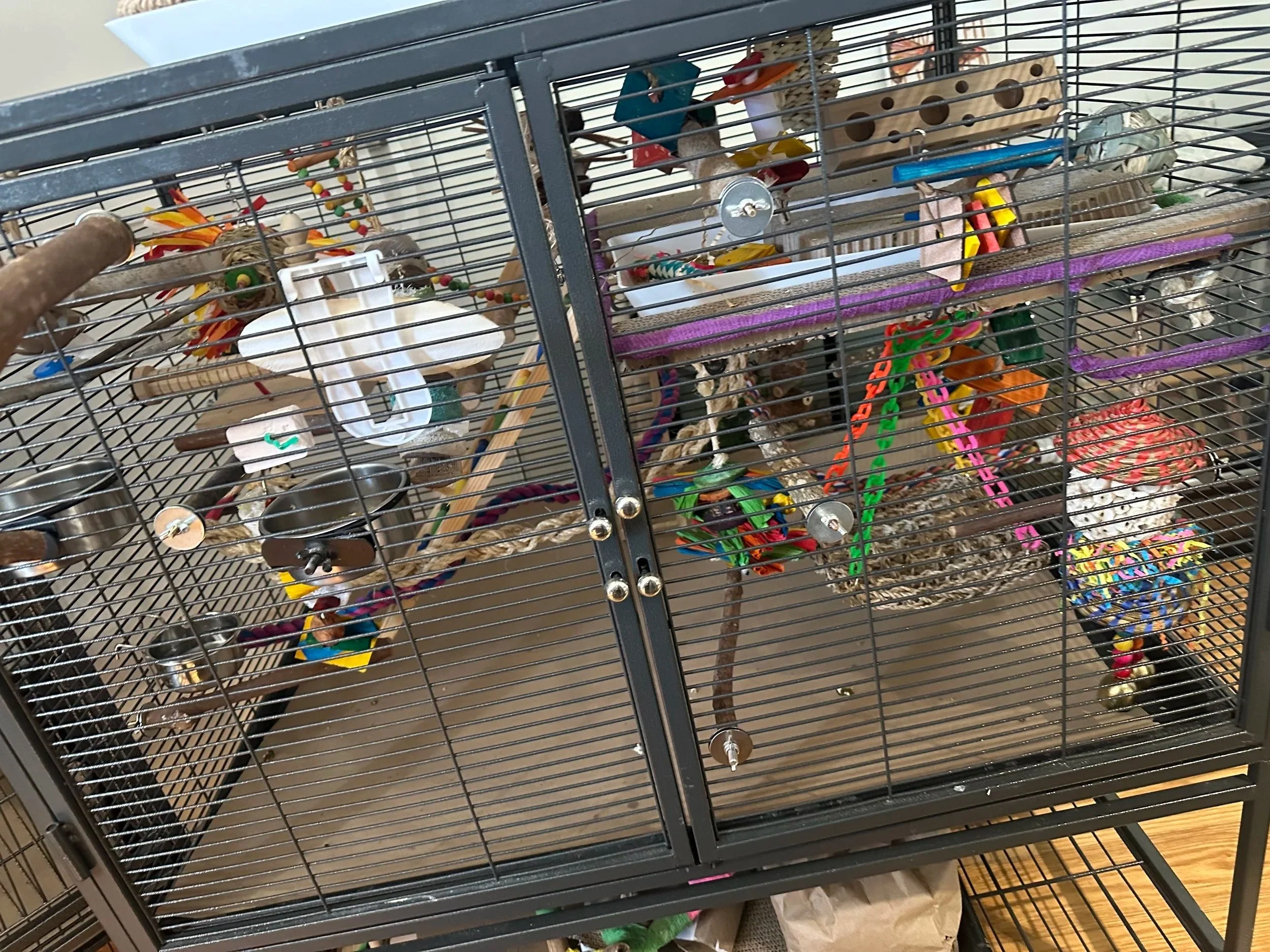
We don't recommend this set-up for 2 cockatiels they just flew in for the picture!
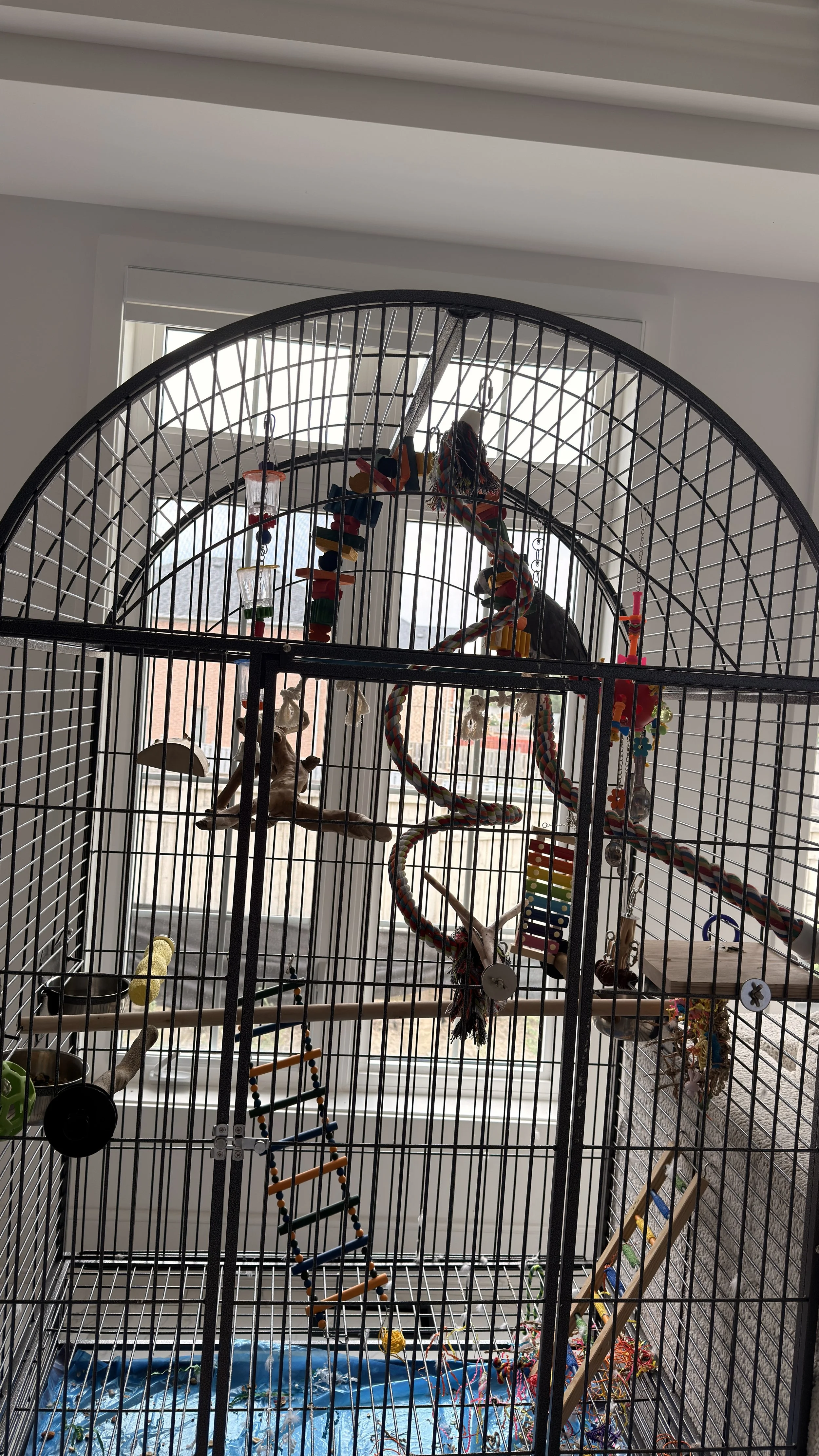
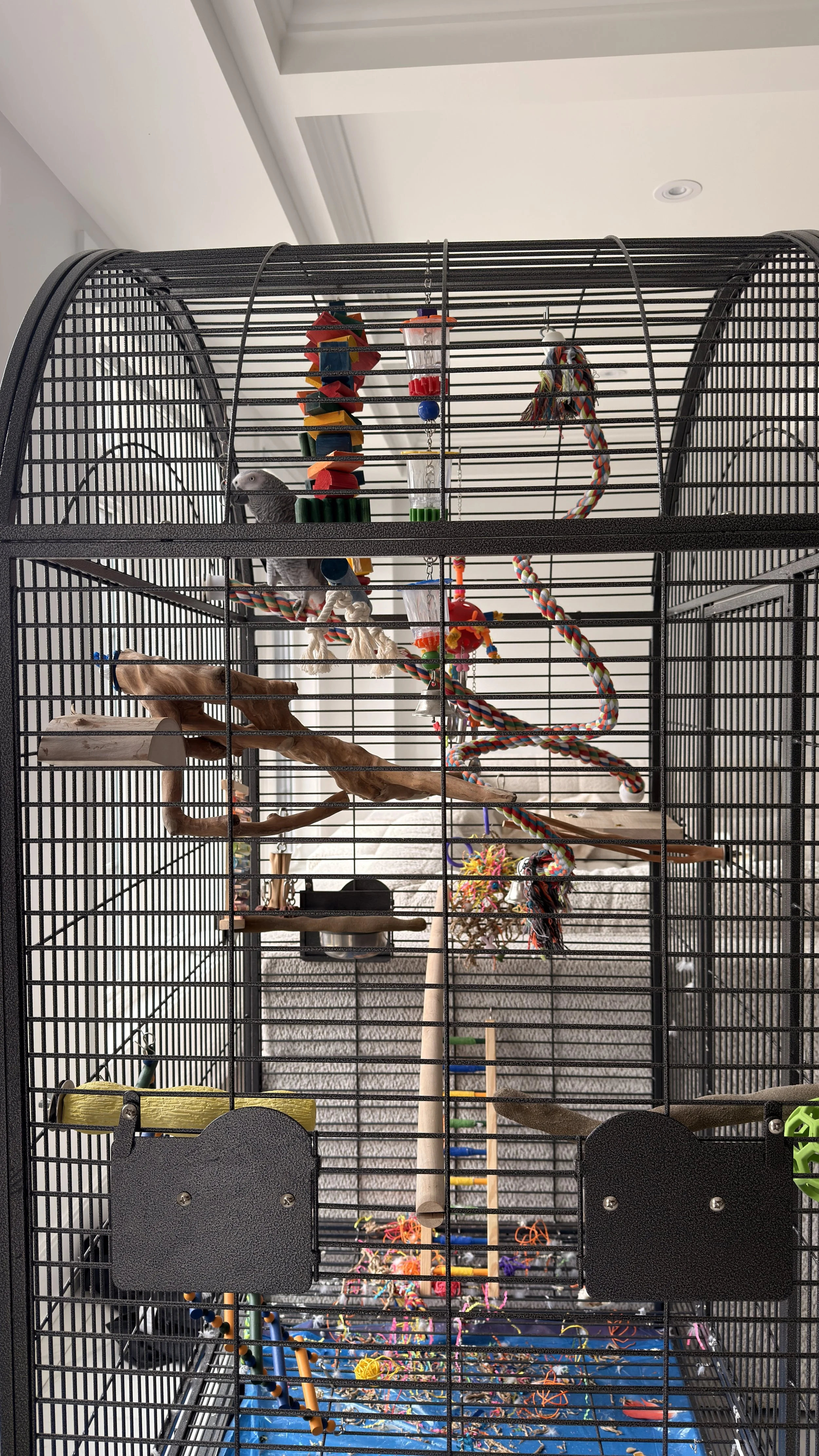
Large bird cage set-up example: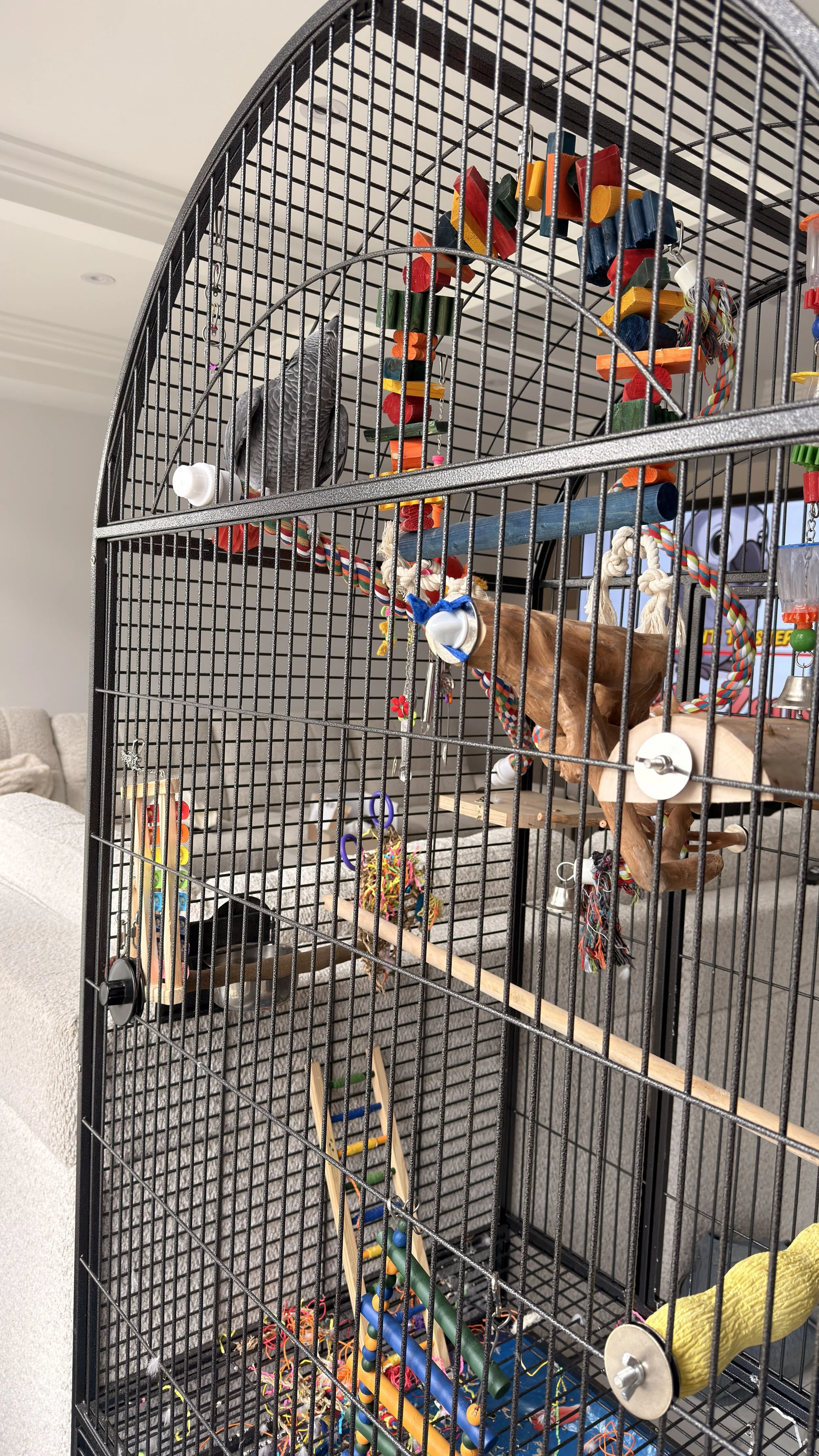
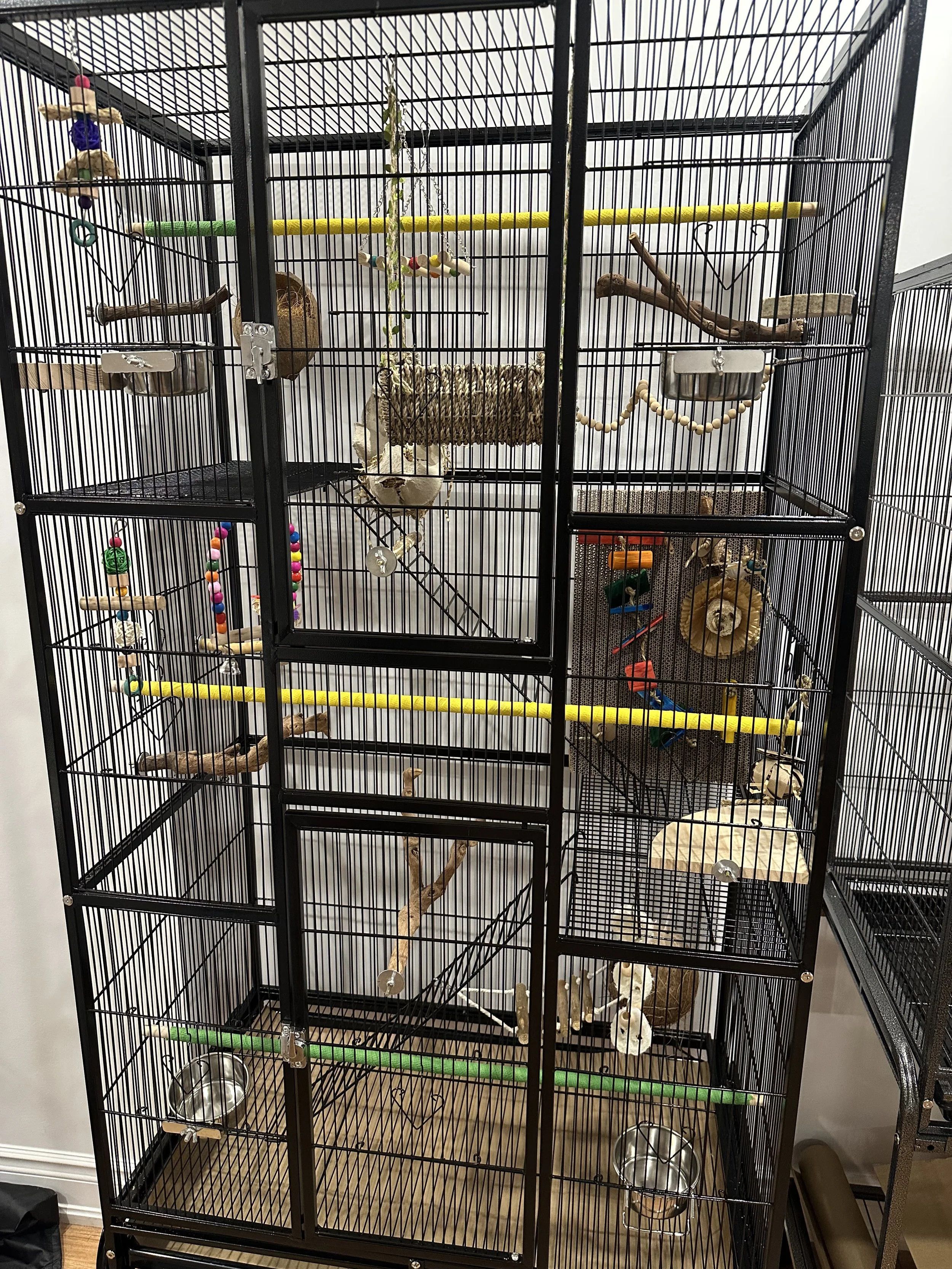
Medium bird cage set-up example: